
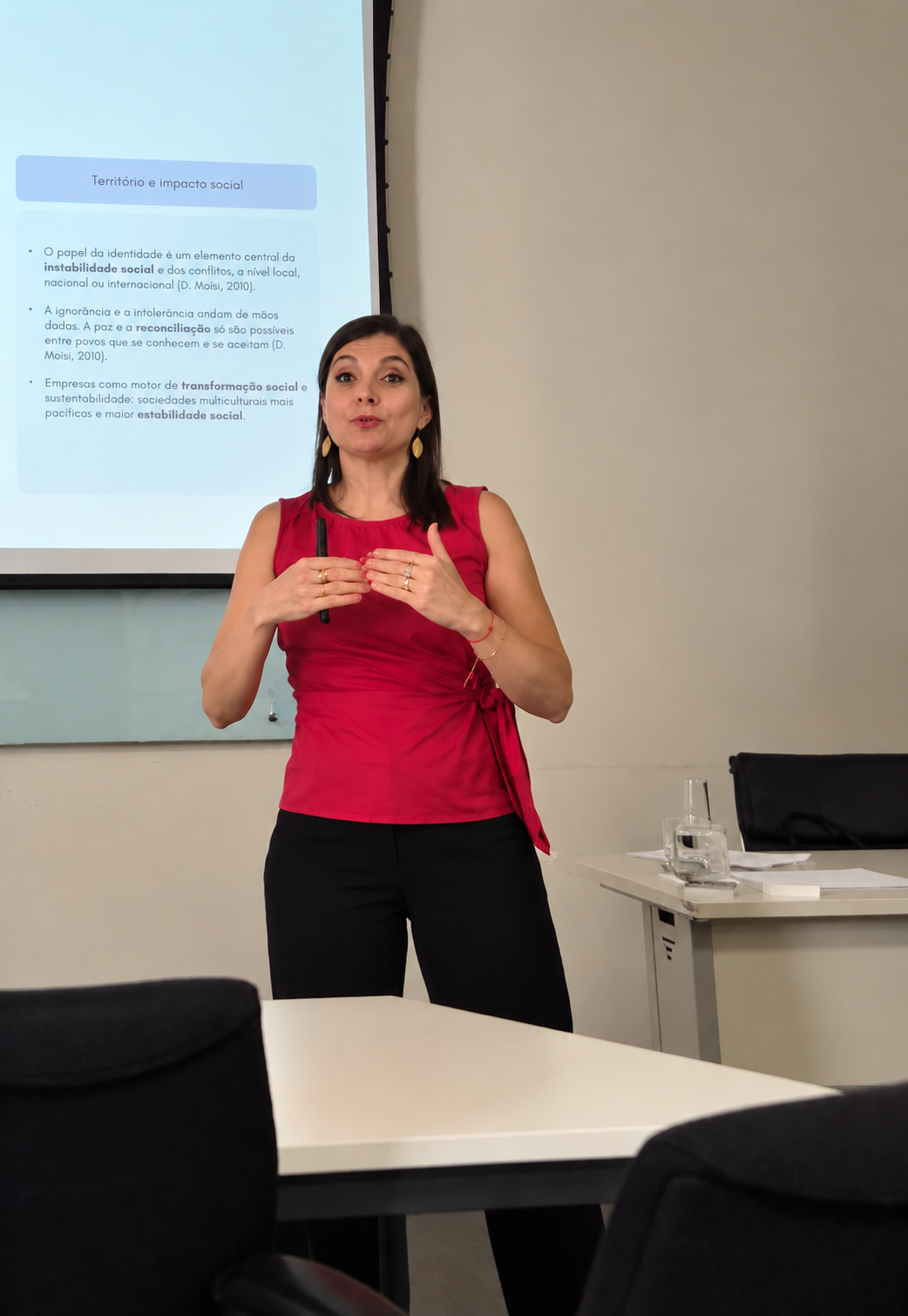
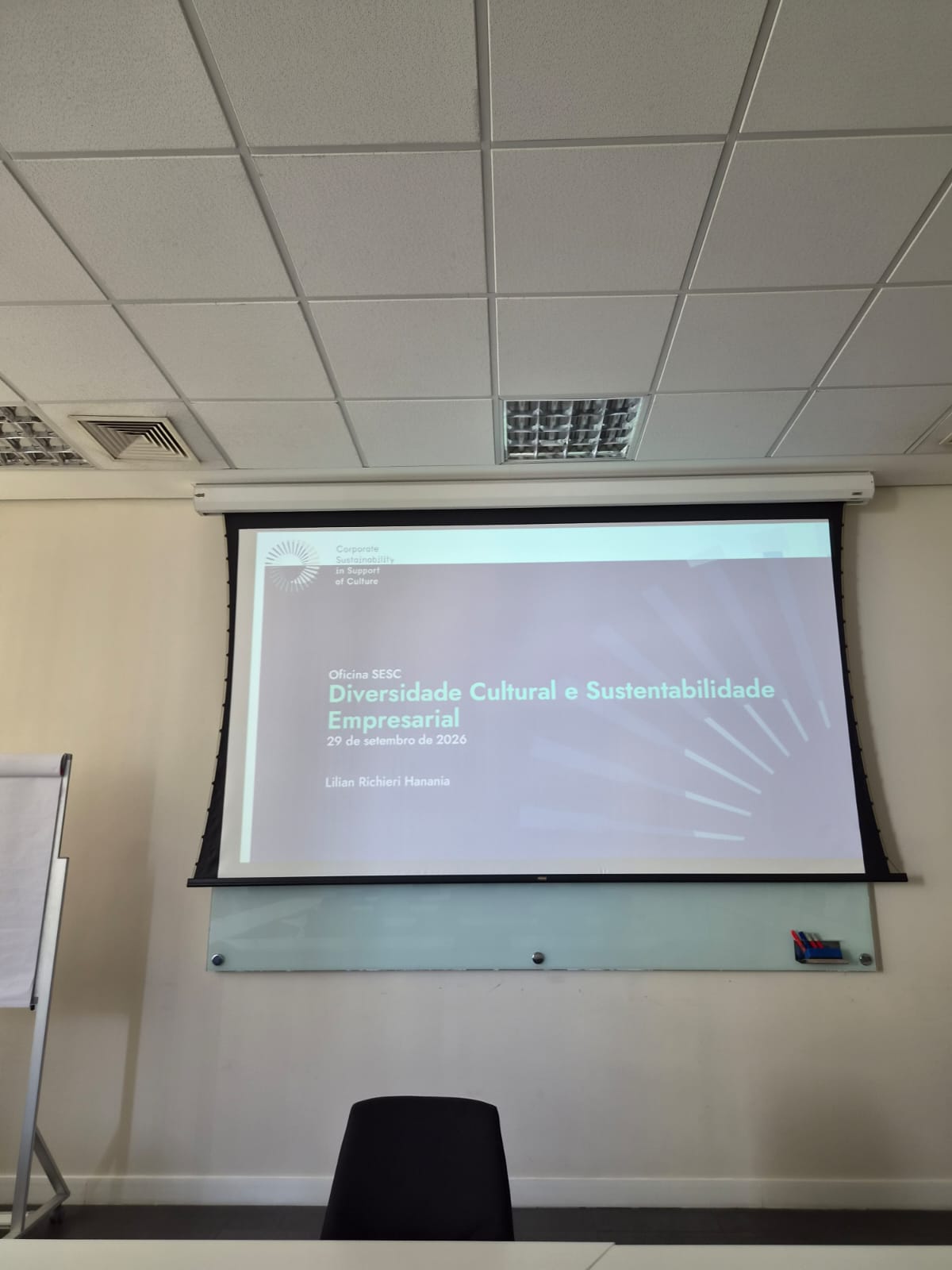
On September 29, 2026, Lilian Richieri Hanania, Co-Founder and Director of the CSSC Network – Corporate Sustainability in Support of Culture, led a workshop at SESC São Paulo on the role of culture and cultural diversity in corporate strategies.
Drawing on the framework used by the CSSC Network and a participatory approach inspired by Appreciative Inquiry, the workshop invited participants to build on their own experiences and reflect on the resources already available within their organizations, the practices that work, and opportunities to strengthen their contribution to culture and cultural diversity.
Drawing on concrete business experiences, the discussions highlighted the following key elements for building coherent, effective initiatives capable of delivering meaningful impact:
1. Strategy and Consistency
2. Integrating Culture and Sustainability into the Business Model
A company’s ability to act over the long term is strengthened when these issues are not treated as peripheral activities, but instead are integrated into its mission, purpose, or business model. Some companies are founded with this orientation already embedded in their DNA. Others develop it progressively. In both cases, the challenge is to make contributions to society, culture, and diversity a coherent component of the organization’s strategy.
3. An Organizational Structure Aligned with Stated Priorities
4. An Ecosystem- and Community-Based Approach
The approach developed by the CSSC Network encourages companies to see themselves as actors within an ecosystem, interacting with employees, communities, local areas, cultural and creative stakeholders, public authorities, and other stakeholders.
The discussions facilitated in the workshop confirmed the importance of this approach. Before designing an initiative, companies need to understand the communities concerned, their realities, their needs, and the diversity within them. Their participation makes it possible to build projects with communities, rather than simply for them. This proximity contributes not only to the relevance of initiatives, but also to their legitimacy and their ability to generate a more lasting impact.
5. Combining Institutional Leadership with Proximity to the Field
6. Communicating to Create Dialogue, Not Just Visibility
7. Measure, Evaluate, and Learn
A special thank you to all the workshop participants for their engagement, enthusiasm, and thoughtful contributions. The wealth of experiences and perspectives they shared brought the CSSC framework into dialogue with a wide range of business realities and contributed to an especially constructive collective reflection.