
An event at Pinacoteca de São Paulo brought together companies, experts, and government representatives to discuss how cultural diversity can strengthen ESG, innovation, social impact, and generate economic value for companies.
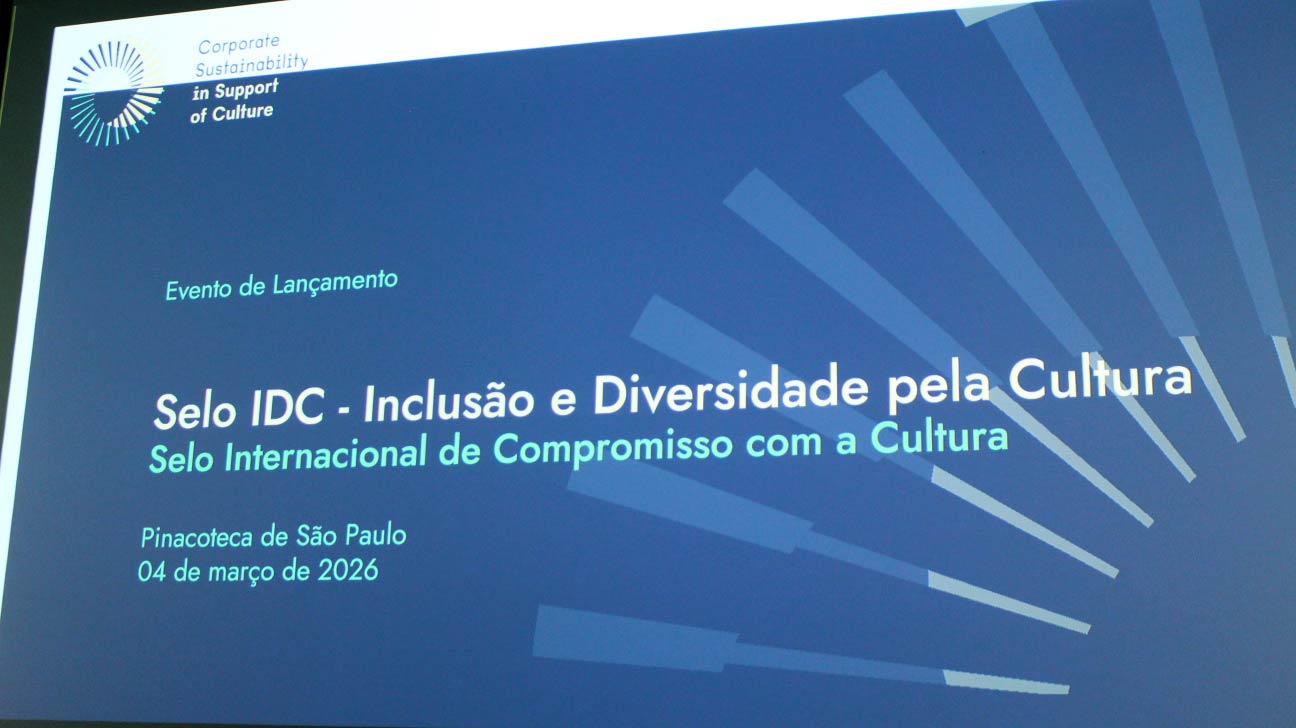
On March 4, 2026, the Pinacoteca de São Paulo hosted the launch event for the IDC Label – Inclusion and Diversity through Culture, an initiative of the CSSC (Corporate Sustainability in Support of Culture) Network that seeks to integrate culture and cultural diversity into corporate sustainability strategies.
The meeting brought together representatives from the private sector, the Ministry of Culture, cultural institutions, and civil society to discuss an increasingly relevant topic: how culture can become a strategic pillar of ESG/CSR policies.
The event also marked an important symbolic moment: the law firm Machado Meyer Advogados became the first organization to be recognized with the IDC Label, after participating as a pilot company in the research project conducted by Lilian Richieri Hanania and Anne-Thida Norodom, co-founders of the CSSC Network, at Paris Cité University.
More than just institutional recognition, the label was presented as a concrete tool for organizational transformation, capable of structuring indicators, guiding corporate strategies, and assessing the impact of companies in promoting cultural diversity.
What is the IDC Label?
The IDC Label – Inclusion and Diversity through Culture is an international recognition awarded by the CSSC Network (Corporate Sustainability in Support of Culture) to companies that integrate culture and cultural diversity into their sustainability strategies.
Based on more than twenty years of academic research, the label uses a rigorous methodology that evaluates two main aspects:
- Cultural diversity within the company (governance policies, diversity in teams, people management)
- The company’s impact on society (support for culture, impact on territories,
relationship with communities and cultural industries)
The process includes structured questionnaires, qualitative analysis, and independent auditing, ensuring credibility and comparability between organizations.
More than just symbolic recognition, the IDC Label serves as a strategic tool for
transformation, helping companies structure cultural diversity policies and strengthen their sustainability strategies.


Culture: a still largely unexplored pillar of ESG
One of the central points of discussion at the event was that, although the concept of ESG is now widely disseminated, its cultural dimension is still insufficiently considered in business strategies.
However, international instruments and recent debates on sustainability recognize that there can be no sustainable development without culture.
Culture influences identities, values, social practices, and economic relations. It plays a fundamental role in building more inclusive, innovative, and resilient societies.
Integrating cultural diversity into business strategies therefore means strengthening the sustainability of organizations and the stability of the territories in which they operate.
The IDC Label emerges in this context as a pioneering instrument for structuring this dimension in corporate policies, offering indicators and criteria that allow for an objective assessment of companies’ commitment to cultural diversity.
Cultural diversity also generates value for companies
One of the most highlighted aspects during the event was that integrating culture and cultural diversity into business strategies is not just a matter of social responsibility, it is also a strategy for generating economic value.
Experiences presented throughout the discussions showed that companies that promote culturally diverse environments tend to see gains in innovation, creativity, and the quality of strategic decisions. Diverse teams broaden perspectives, strengthen organizations’ ability to adapt, and contribute to more innovative solutions in increasingly complex economic and social contexts.
In addition, initiatives aimed at inclusion in consumer relations show that more inclusive business practices can expand markets and strengthen consumer confidence.
Studies and corporate experiences indicate that consumers belonging to historically underrepresented groups often stop consuming certain brands after experiences of discrimination. On the other hand, more inclusive environments tend to generate loyalty, expand audiences, and strengthen companies’ reputations.
In this sense, integrating cultural diversity into corporate strategies can translate into greater competitiveness, innovation, and economic value creation.
The IDC Label helps to highlight companies’ efforts in this area, encouraging consumers to make better choices about what they consume, and companies to consider cultural diversity as a strategic asset.

Culture, human rights, and public policy
Another central theme of the discussions was the recognition that cultural rights are part of human rights.
Access to culture, memory, and cultural expression is fundamental to building citizenship, strengthening democracy, and promoting sustainable development.
In this context, public cultural policies play an essential role in promoting cultural diversity and democratizing access to culture. By engaging with these policies, the IDC Label can help bring companies and cultural institutions closer together, strengthening partnerships and expanding the impact of cultural initiatives in the territories.

Culture, territory, and sustainable development
The discussions also highlighted the role of culture in territorial development and the creative economy. Culture can function as a true social infrastructure, contributing to strengthening local identities, stimulating community coexistence, and generating economic opportunities.
Cultural projects developed in vulnerable territories demonstrate that culture can promote social inclusion, develop socio-emotional skills, and strengthen the community fabric.
At the same time, initiatives aimed at valuing traditional knowledge and sustainable production chains show that economic development, environmental protection, and cultural diversity can go hand in hand.
The IDC Label reinforces this approach by encouraging companies to consider not only their internal diversity policies, but also the impact of their activities on the territories and communities in which they operate.

With our moderator and our panel 2 speakers – Piatã Kignel, Lilian Hanania, Giuliana Kauark, Lina Pimentel, Felipe Bannitz, Secretary Cláudia Leitão and (via video) Bruno Temer. (Photo by Augusto Citrangulo)
A strengthening collaboration
The launch of the IDC Label marks the beginning of a broader agenda for cooperation between companies, cultural institutions, and public actors. By proposing indicators and a rigorous methodology for assessing corporate commitment to cultural diversity, the label contributes to broadening the debate on ESG and integrating culture more consistently into
corporate strategies.
More than just recognition, the IDC Label represents an invitation to companies to participate in an international movement that seeks to position cultural diversity as a central pillar of sustainability, as well as a driver of innovation and economic value creation.

Key ideas from the speakers
“Inclusion and diversity are not parallel initiatives; they are part of the strategy and sustainability of organizations. When treated with method, indicators, and institutional commitment, they are no longer mere rhetoric and become management practice instead.”
Camões de Oliveira Dias – Pinacoteca de São Paulo
Gisele Dupin – Ministry of Culture
“Diversity is essential for the growth of organizations and society. It broadens perspectives, generates innovation, and strengthens relationships. Promoting it must be a collective commitment — a responsibility of each person, as an individual, and of each company, as an institution.”
Silvia Heidrich – Coface
Dione Assis – Black Sisters in Law
Secretária Cláudia Leitão – Ministry of Culture
Lina Pimentel – FEAC Foundation
Bruno Temer – Michelin
“The Social Peace Charter, the instrument that established the mission of the institution [SESC], established, as early as the 1940s, the mission of promoting socio-educational actions that contribute to the social well-being and quality of life of workers.”
Mauricio Trindade – SESC
Felipe Bannitz – Mandu Social